
Battery manufacturing capacity in North America has expanded from roughly 30 gigawatt-hours in 2020 to over 150 GWh today. Five years ago, that would have been cause for celebration. Today, it creates a different kind of problem entirely.
The automotive supply base is bleeding. Profit margins among suppliers have fallen from 8.5% in 2017 to roughly 3% today. Companies are locked in this brutal position: legacy diesel and gasoline production still generates cash, but the transition to electric demands billions in upfront capital with no guarantee of profit. The question isn’t whether the industry will electrify. It’s whether the suppliers, manufacturers, and workers in the middle of this transition can survive it.
The Capacity Paradox
The U.S. now has over 15 active battery manufacturing facilities, with another 10+ under construction or planned. Ford, GM, Stellantis, Hyundai, LG, SK Innovation, and Ultium Cells have all committed billions to North American production. By 2030, domestic capacity is projected to exceed 400 GWh annually, enough to supply roughly 4 million EVs per year. These numbers should inspire confidence.
Instead, most of these plants are running below 50% utilization. EV sales in the U.S. hit 1.6 million units in 2024, up from 1.2 million in 2023, which is solid growth. It’s just not enough to absorb the production capacity being built. When you’ve borrowed billions to construct a facility, 50% utilization isn’t a business plan. It’s a problem you’re counting on demand to solve.
There’s another constraint nobody talks about enough: lithium. The U.S. produces roughly 0.1% of the world’s lithium. While the government has pushed hard on nearshoring, bringing production closer to home rather than relying on Australia, Chile, and China, the domestic mining infrastructure doesn’t exist yet. Most operations are still in development or stuck in permitting delays. Cobalt, nickel, and other critical minerals face the same bottleneck. Until U.S. mining scales up, the industry stays dependent on imports, which keeps supply chains fragile and costs high.
The Supplier Squeeze
Traditional suppliers built their entire business on producing engines, transmissions, and fuel systems. Those components will keep generating revenue for another 15+ years. Diesel trucks aren’t disappearing. The problem is that this revenue is in managed decline while EV production requires completely different expertise: battery pack integration, power electronics, thermal management. A company that made billions on fuel injector systems can’t just retool and start competing in battery electronics.
The transition demands R&D investment, workforce retraining, and massive capital expenditure at a time when cash flow is tightening. Some of the largest suppliers have committed $5-15 billion each to pivot their operations. For hundreds of smaller regional suppliers, that level of investment is simply impossible.
The result is consolidation. Tier-1 suppliers are acquiring competitors, regional shops are shutting down, and workers are facing retraining or layoffs. This happened before, during the shift from carburetors to fuel injection, but it took longer. Today’s timeline is compressed. The window to adapt has shrunk from decades to years.
Where the Money Is Actually Going
There are real investments happening that move past the grim narrative. Capital is flowing toward three areas that will shape the next decade.
Battery chemistry. CATL, BYD, and SK Innovation have all published research on solid-state battery architectures. These promise higher energy density and lower costs than lithium-ion. The U.S. lags here. Most advances are coming from Asia. But American companies like QuantumScape and Solid Power are developing domestically produced solid-state cells, with commercial viability expected around 2027-2028. This matters because solid-state could cut battery costs and improve performance faster than incremental lithium-ion improvements.
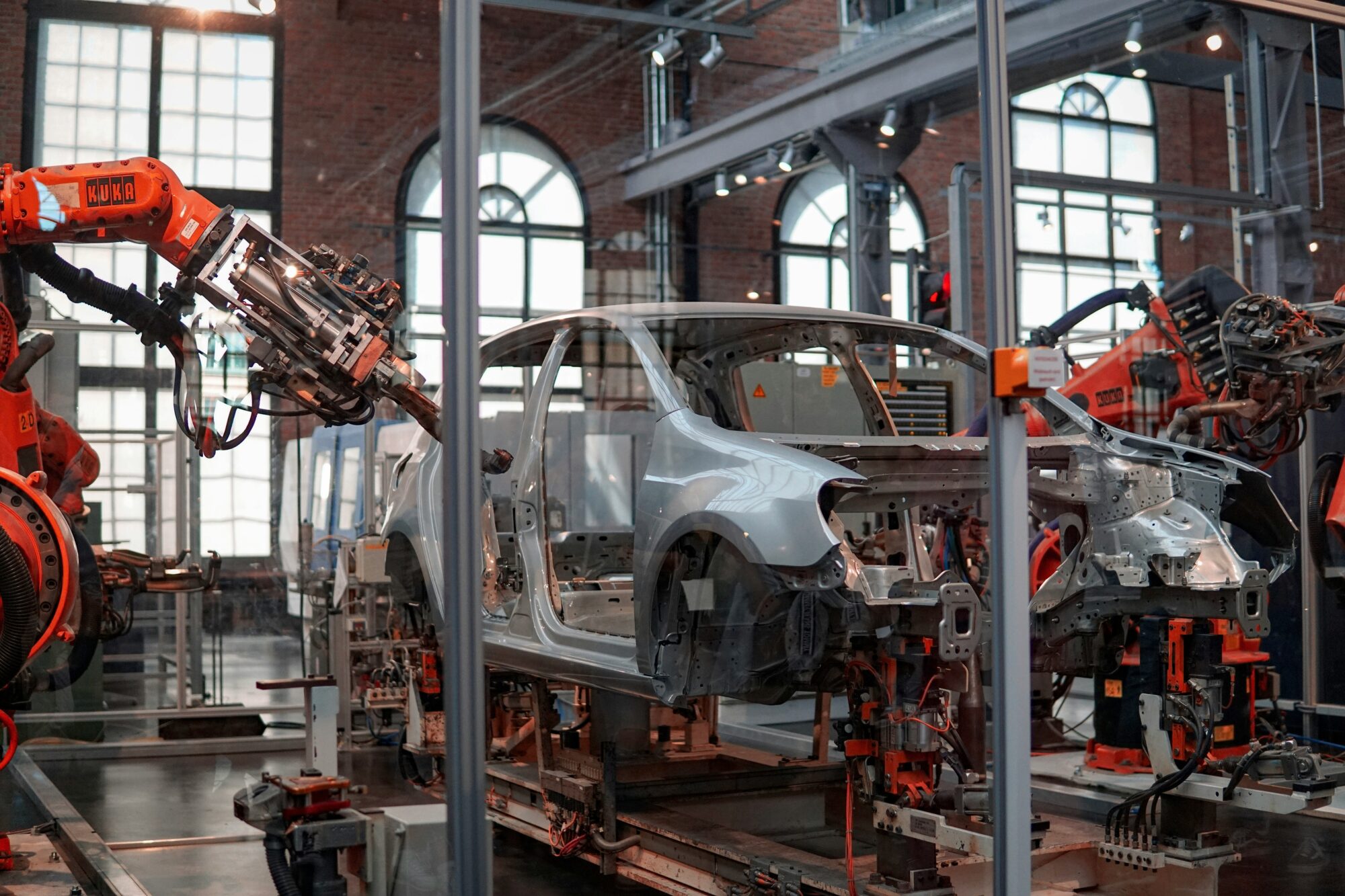
Manufacturing automation. Battery pack assembly is still incredibly labor-intensive. A single pack takes hours to assemble manually, with workers hand-soldering connections and stacking cells. Tesla, Redwood Materials, and emerging startups are building fully automated lines where robots handle most of the work. Tesla’s Berlin factory has shown how this reduces labor per unit compared to traditional plants. The yield rates aren’t perfect yet, but they’re improving. This matters because automation makes battery manufacturing competitive in high-wage countries.
Recycling operations. Redwood Materials and Li-Cycle are building battery recycling systems that recover lithium, cobalt, and nickel from used packs. If you recover 95% of lithium from an end-of-life pack, you’ve reduced your mining dependency by that amount. By 2030, recycled materials could supply 10-15% of U.S. lithium demand. It won’t eliminate the mining shortage, but it’s real supply that doesn’t require new mines or the environmental costs that come with them.
The Skills Gap
Advanced battery manufacturing requires skills that weren’t common in traditional automotive production. Cell chemistry, power electronics, thermal systems. A worker who’s spent 20 years on a traditional production line doesn’t automatically bring those capabilities to a battery pack facility.
Ford, GM, and Stellantis have partnered with community colleges and vocational schools to build training programs. Community colleges in Michigan, Ohio, and Indiana have trained thousands of workers. The pipeline is working, though demand still outpaces supply.
Here’s what training programs can’t fix: geography. Some workers will retire rather than retrain. Others live nowhere near new battery plants or EV component facilities. The old manufacturing corridors aren’t where the new jobs are. A worker in a shuttered transmission plant in Ohio can’t just move to a new battery facility in a different state. The geographic mismatch creates real hardship that retraining alone won’t solve. It’s a cost that sits beneath the statistics.
What This Looks Like on the Ground
For a traditional supplier, sitting still is no longer an option. Companies waiting to see if EVs really take off are losing market share and strategic position. Bosch committed $8 billion to electrification. ZF is restructuring around power electronics and software. The ones making real investments now will own the market in 2035. The ones hoping legacy production carries them another decade are quietly fading.
For manufacturers, the math is brutal. Legacy operations generate most of the profit but are in managed decline. EV production is growing but unprofitable. There’s no perfect way to balance this. GM’s decision to separate EV operations from legacy production is one answer. Tesla’s relentless focus on manufacturing automation is another. Each company is finding its own path through this, but inaction is the only strategy that guarantees failure.
For workers, the direction is clear. Advanced battery manufacturing will grow. So will power electronics, thermal management, automation. These aren’t trendy buzzwords. They’re where jobs are being created and where they’ll stay created. Workers developing these skills will find opportunities. Those who don’t will find the job market narrowing.
The Transition Won’t Be Quick
The automotive industry is electrifying. Capacity is being built. Capital is flowing. This is real. But the path there is expensive, painful, and slower than anyone predicted. Suppliers with half-empty plants aren’t going out of business next year. They’re just slowly losing value. Workers in legacy production aren’t immediately unemployed. They’re just aware that their skills have an expiration date. This is an industry-wide adjustment that will take longer to complete than it already has.
The companies surviving this period are the ones making choices instead of hoping for the best. They’re investing in automation even when labor costs don’t yet justify it. They’re building mining and recycling infrastructure knowing they won’t be profitable for years. They’re shutting down facilities in expensive regions and opening them in cheaper ones, displacing thousands in the process.
The question isn’t whether the industry transitions. That’s happening. The question is whether you’re part of the solution or the problem. For suppliers and manufacturers, this means choosing what bets to make with limited capital. For workers, it means developing skills that will matter in five years, not maintaining expertise that matters today.
The manufacturing transition to electric is real. It’s just taking longer and costing more than it should.
Works Cited
U.S. Department of Energy. “Biden-Harris Administration Announces 14 New Investments Supporting Domestic Battery Manufacturing.” Energy.gov, https://www.energy.gov/articles/biden-harris-administration-announces-14-new-investments-supporting-domestic-battery-manufacturing.
U.S. Geological Survey. “Where Do We Get Lithium?” USGS, https://www.usgs.gov/faqs/where-do-we-get-lithium.
PR Newswire. “Bosch Plans to Invest Over 8 Billion in Electrification.” PR Newswire, https://www.prnewswire.com/news-releases/bosch-plans-to-invest-over-8-billion-in-electrification-301765098.html.
Tesla. “Berlin Factory.” Tesla, https://www.tesla.com/berlin-factory.
U.S. EV Sales Data. 1.6 million units (2024), 1.2 million units (2023). Industry reports and EV trade publications.
Manufacturing Supplier Profitability. Margins declining from 8.5% (2017) to approximately 3% (current). Data sourced from MEMA (Motor Equipment Manufacturers Association) analysis and automotive supply chain research.